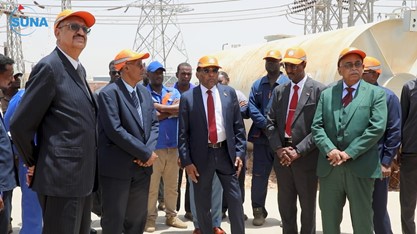
TSC President Inspects Omdurman Market
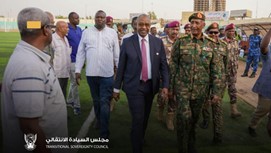
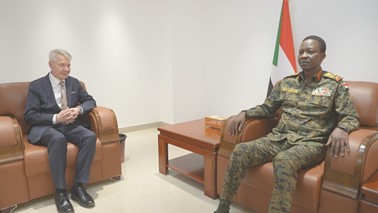
The President of the Transitional Sovereignty Council (TSC) and Commander-in-Chief of the Armed Forces, General Abdel Fattah Al-Burhan, inspected Omdurman.
TSC President Inspects Omdurman Market
The President of the Transitional Sovereignty Council (TSC) and Commander-in-Chief of the Armed Forces, General Abdel Fattah Al-Burhan, inspected Omdurman.
Foreign Minister Heads Sudan Delegation at 13th World Urban Forum in Baku

Minister of Foreign Affairs and International Cooperation Ambassador Mohi-Eddin Salim led Sudan’s delegation to the 13th World Urban Forum (WUF13), hosted by Azerbaijan in its capital, Baku, in partnership with UN-Habitat.
The forum brought together heads of state and government, ministers, representatives of regional and international organizations, and experts in urban development and sustainable housing.
Addressing the high-level ministerial meeting on the New Urban Agenda, the Minister described the forum as an important platform for exchanging expertise and discussing challenges related to urban development and building safe, resilient cities. He said this year’s theme, “Housing the World: Safe and Resilient Cities and Communities,” directly reflects Sudan’s reality and the aspirations of its people amid the exceptional conditions caused by attacks carried out by the rebel Rapid Support Forces (RSF) militia against cities, infrastructure, and vital facilities.
The Minister noted that Sudan has suffered widespread destruction affecting residential areas, health facilities, water and electricity networks, and educational institutions, leading to the displacement of millions and creating major challenges for reconstruction, restoration of essential services, and rehabilitation of affected communities.
Despite current challenges, he said the government has begun implementing national programmes to restore basic services in areas witnessing the return of displaced persons (IDPs) and refugees under voluntary return programmes, with support from friendly countries and international development organizations. He also revealed that the government launched a housing initiative last year that includes plans to build one million housing units for low-income youth as part of efforts to strengthen social stability and provide adequate housing for populations affected by war and displacement.
During his address, the Minister also reviewed Sudan’s comprehensive peace initiative submitted to the United Nations and the Security Council in late 2025. The initiative includes an integrated roadmap for ending the conflict through a ceasefire, civilian protection, humanitarian access, support for refugees and IDPs, as well as disarmament, demobilization, reintegration, national reconciliation, and reconstruction programmes. He said the initiative reflects Sudan’s commitment to resolving the crisis through peaceful means and building broad national consensus leading to transparent, free and fair elections at the end of the transitional period, noting that it has received backing from several countries and regional and international organizations. Concluding his remarks, the Minister conveyed Sudan’s appreciation to Azerbaijan and UN-Habitat for hosting the forum, while voicing confidence that its deliberations would strengthen international cooperation and support Sudan’s reconstruction and sustainable urban development efforts.
In statements following the session, the Sudanese foreign minister stressed the importance of Sudan’s participation in the forum as a key platform for exchanging international expertise and experiences in sustainable urban development, housing, and reconstruction. He added that Sudan attaches particular importance to rebuilding infrastructure, developing cities, and improving basic services in the post-war phase.
The minister further noted that Sudan’s participation also aims to strengthen cooperation with international organizations and sisterly and friendly countries, while benefiting from successful experiences in urban planning and sustainable development in support of national efforts to achieve stability, development, and reconstruction.
Foreign Minister Participates in Opening Session of 13th World Urban Forum in Baku
Minister of Foreign Affairs and International Cooperation Ambassador Mohi-Eddin Salim on Monday participated, on behalf of the President of the Transitional Sovereignty Council (TSC), General Abdel Fattah Al-Burhan, in the opening session of the 13th World Urban Forum in Baku.
The forum brought together heads of state and government, ministers, senior officials, and representatives of international and regional organizations concerned with sustainable urban development.
The opening session featured remarks by several world leaders and international officials on the challenges associated with urban expansion, the importance of sustainable development, smart cities, housing and infrastructure services, as well as support for reconstruction efforts and building more resilient cities capable of confronting economic and climate challenges.
The session was attended by Azerbaijani President Ilham Aliyev, alongside senior United Nations and UN-Habitat officials. In statements following the session, the Sudanese foreign minister stressed the importance of Sudan’s participation in the forum as a key platform for exchanging international expertise and experiences in sustainable urban development, housing, and reconstruction. He added that Sudan attaches particular importance to rebuilding infrastructure, developing cities, and improving basic services in the post-war phase.
The minister further noted that Sudan’s participation also aims to strengthen cooperation with international organizations and sisterly and friendly countries, while benefiting from successful experiences in urban planning and sustainable development in support of national efforts to achieve stability, development, and reconstruction.
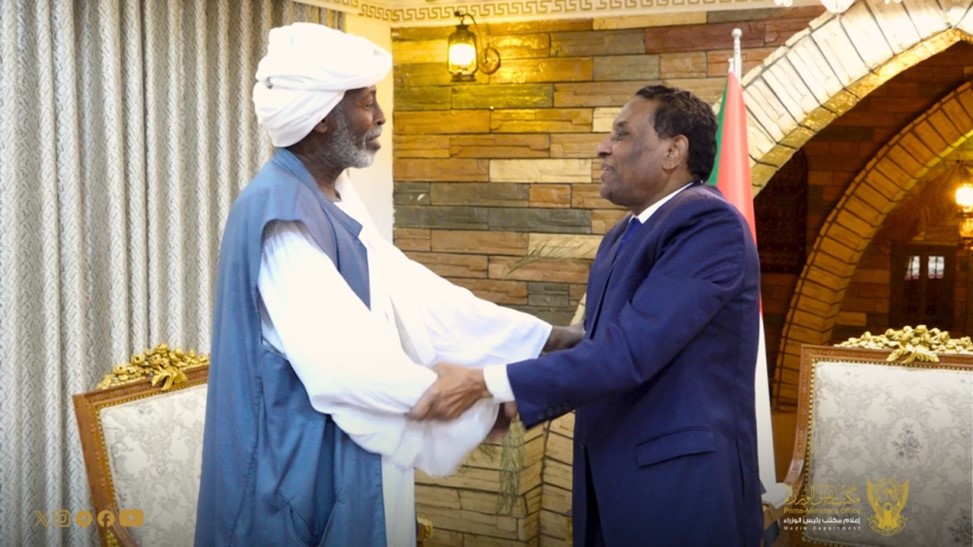
Kamil Idris Praises Sudanese Diaspora’s Role in Supporting National Reconstruction

Prime Minister Dr. Kamil Idris praised the contributions of Sudanese communities abroad in strengthening Sudan’s unity and supporting efforts toward stability and development, underscoring the importance of their role in the country’s national reconstruction process.
The remarks came during his meeting on Saturday with members of the Sudanese community in the British capital, London, in a national gathering marked by a warm atmosphere and positive engagement, attended by the accompanying delegation.
The meeting witnessed broad interaction and dialogue, with participants expressing their appreciation for the visit and affirming their commitment to supporting national efforts aimed at reinforcing Sudan’s unity and achieving security, stability, development, and a more prosperous future for the country.
Participants also stressed the importance of strengthening ties between Sudan and its citizens abroad, as well as enhancing the role of Sudanese diaspora communities in supporting national causes.
Finance Minister Meets UNDP Representative in Sudan

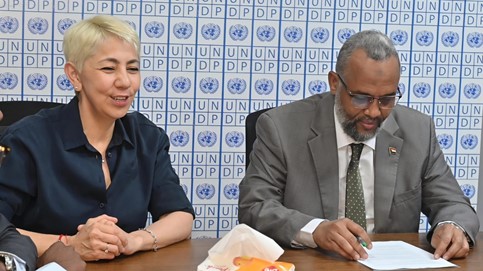
Finance Minister Dr. Gebreil Ibrahim discussed with the United Nations Development Programme (UNDP) efforts to support economic recovery and stability in Sudan, as well as initiatives aimed at assisting reconstruction and development projects.
The discussions took place during a meeting in Khartoum on Sunday with Acting UNDP Resident Representative in Sudan, Surayo Buzurukova. The Minister affirmed the ministry’s readiness to receive all forms of technical assistance and initiatives supporting reconstruction and post-war recovery efforts. He urged United Nations Development Programme to intensify efforts to mobilize international support through regional and international development and financing institutions to help Sudan implement development, reconstruction, and future strategic projects.
The Minister stressed the importance of prioritizing access to clean and safe water through renewable energy sources to serve the largest possible number of people in safe areas, alongside strengthening food security efforts. He also underscored the importance of supporting the government’s digital transformation and economic reform agenda, in addition to integrating the informal economy into the formal sector to advance economic development.
The Minister further endorsed the organization of a private sector briefing conference in coordination with UNDP Sudan to encourage participation in implementing development and public service projects across the country. For her part, the Acting UNDP Resident Representative called for stronger coordination between Sudan and UNDP to maximize benefit from services provided by regional and international development institutions, reaffirming the programme’s readiness to provide all forms of technical support for development projects in Sudan.
Al-Safana: UAE Funds and Arms RSF Militia and Leads the War against Sudan

Ali Rizqallah “Al-Safana,” a commander who defected from the rebel militia, stated that the United Arab Emirates (UAE) is fully responsible for financing and arming the Rapid Support Forces (RSF) militia, noting that it has been directly supplying military equipment to Darfur via aircraft flights landing on improvised dirt airstrips spread across Darfur and Kordofan.
Speaking at a press conference in Khartoum on Saturday, Al-Safana said the militia had long prepared to dismantle Sudan and that the war was launched under UAE orders, planning, and full financial support. He added that the management of the war is now effectively in the hands of the UAE, while the militia leadership is merely executing decisions it has no power to stop. He further stated that the United Arab Emirates is leading the war against Sudan and drawing in Western and African countries into the conflict, in addition to recruiting foreign mercenaries through financial incentives.
Al-Safana also addressed social components within the militia, saying that the path of return to the homeland remains open, and stating that the Dagalo family is pushing communities from Darfur and Kordofan toward destruction for its own interests, while disregarding the suffering and losses of other groups. He confirmed that RSF commander Mohamed Hamdan Dagalo was injured in the vicinity of the General Command of the Armed Forces in Khartoum during the early days of the war. He added that Hemedti is currently moving between several African countries, the UAE, and Nyala, noting that the Sudanese Armed Forces are monitoring his movements.
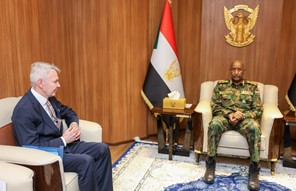
TSC President, King of Bahrain Hold Bilateral Summit to Discuss Cooperation and Regional Challenges

A Sudanese-Bahraini summit was held on Wednesday at Al-Sakhir Royal Palace in the Bahraini capital, Manama, co-chaired by the President of the Transitional Sovereignty Council (TSC), Commander-in-Chief of the Armed Forces, General Abdel Fattah Al-Burhan, on the Sudanese side, and King Hamad bin Isa Al Khalifa of the Kingdom of Bahrain on the Bahraini side.
The summit discussed the long-standing fraternal relations between the two countries and ways to enhance and develop cooperation across various fields in a manner that serves mutual interests.
The TSC President expressed his appreciation to the King for the warm reception, praising Bahrain’s pivotal role in supporting Sudan and highlighting the strong historical ties between the two peoples. He reaffirmed Sudan’s full support for Bahrain, its government and people, in facing regional challenges, rejected and condemned Iranian attacks against the Kingdom of Bahrain, and expressed Sudan’s readiness to provide all forms of support to the Kingdom. He also reiterated Sudan’s commitment to strengthening and expanding bilateral cooperation in order to serve the aspirations of both nations.
The talks also addressed regional developments amid rising tensions, in addition to issues of mutual concern.
For his part, King Hamad welcomed the visit of the TSC President, describing it as a reflection of the depth of fraternal relations between the two countries. He commended Sudan’s supportive stance toward Bahrain’s security and stability.
The King also affirmed Bahrain’s commitment to further strengthening existing cooperation frameworks and opening new avenues for joint work in the coming period, expressing appreciation for Sudan’s position in support of Gulf security and stability. Both sides agreed to continue consultation and coordination across all fields to achieve the aspirations of the two brotherly peoples.
The Sudanese side was represented at the talks by the Minister of Foreign Affairs and International Cooperation, Ambassador Mohi-Eddin Salim, and the Director of the TSC President’s Office, Maj. Gen. Tarig Saad. The Bahraini side included Crown Prince and Prime Minister Prince Salman bin Hamad Al Khalifa, Sheikh Abdullah bin Hamad Al Khalifa (the King’s personal representative), Foreign Minister Dr. Abdullatif bin Rashid Al Zayani, and Finance Minister Sheikh Salman bin Khalifa Al Khalifa.
Prime Minister Presents Peace Initiative at Oxford Amid Strong Student Engagement

The University of Oxford witnessed a notable event as the Prime Minister, Dr. Kamil Idris, delivered a high-level lecture presenting Sudan’s Peace Initiative before a large academic and student audience that filled the main hall.
The Prime Minister outlined the core pillars of the national initiative, stressing that stability in Sudan is a cornerstone of regional security, and reaffirming the Sudanese people’s determination to overcome current challenges and build a state grounded in institutions and the rule of law.
The session was marked by strong interaction, as Oxford students of various nationalities showed significant interest in the details of Sudan’s peace vision and engaged in an open and dynamic discussion with the Prime Minister following his lecture. Student contributions ranged from questions on Sudan’s development prospects and the role of youth in the post-war phase to expressions of appreciation for the political courage behind the initiative. The discussion reflected a broad international academic awareness of the Sudanese situation and tangible solidarity with the aspirations of its people.
The event went beyond a formal lecture, evolving into an intellectual exchange with extended side discussions between the Sudanese delegation and young researchers. Dr. Idris expressed pride in the level of awareness demonstrated by the students, describing the engagement as a genuine bridge for conveying Sudan’s voice to global centers of intellectual influence.
The session concluded in a positive atmosphere, with participants noting that the initiative offers an optimistic and realistic framework for ending the conflict, strengthening prospects for academic and political support for Sudan’s efforts to consolidate stability.
Sudan Welcomes U.S. House Foreign Affairs Committee Recognition of Darfur Genocide

The Ministry of Foreign Affairs and International Cooperation welcomed a report issued by the U.S. House Foreign Affairs Committee condemning attacks on civilians in Sudan and recognizing the genocide committed by the rebel Rapid Support Forces (RSF) militia against civilians in Darfur. In a statement issued Thursday, the ministry praised the committee for reaffirming Sudan’s sovereignty and territorial integrity and for stressing the importance of preventing external parties from supplying the militia with weapons, funding, and political cover as a key condition for ending the war.
The ministry also reiterated its readiness to work with the U.S. Congress, the U.S. administration, and international partners not involved in supporting the rebel militia to end the war, hold perpetrators of atrocities accountable, and designate the Rapid Support Forces militia as a terrorist organization as a first step toward neutralizing entities that arm and politically support it.
The ministry stressed that achieving peace, stability, and the building of a democratic and stable Sudan remains the central objective of the “Government of Hope,” based on principles that safeguard Sudan’s unity and territorial integrity.
Ibrahim Jabir Affirms State Support for National Cohesion
Member of the Transitional Sovereignty Council (TSC), Lt. Gen. Engineer Ibrahim Jabir, reaffirmed the state’s commitment to supporting all initiatives aimed at establishing a national discourse capable of strengthening national cohesion and addressing the repercussions of war.
During his meeting on Monday with a delegation from the Global Space Center for Culture and Media, he called for the center to serve as an inclusive platform for all those interested in media, culture, literature and the arts in Sudan, and as a starting point for building a Sudanese society capable of overcoming the effects of war on solid foundations. Head of the delegation and Director-General and Acting Minister of the Ministry of Culture and Information in Khartoum State, Al-Tayib Saad-Eddin, said the meeting came within the framework of partnership between Khartoum State and creators and workers in the cultural and media sectors. He noted that all those interested in creative and cultural work are now operating under the umbrella of the Global Space Center.
Sudan Rejects Banjul Joint Declaration
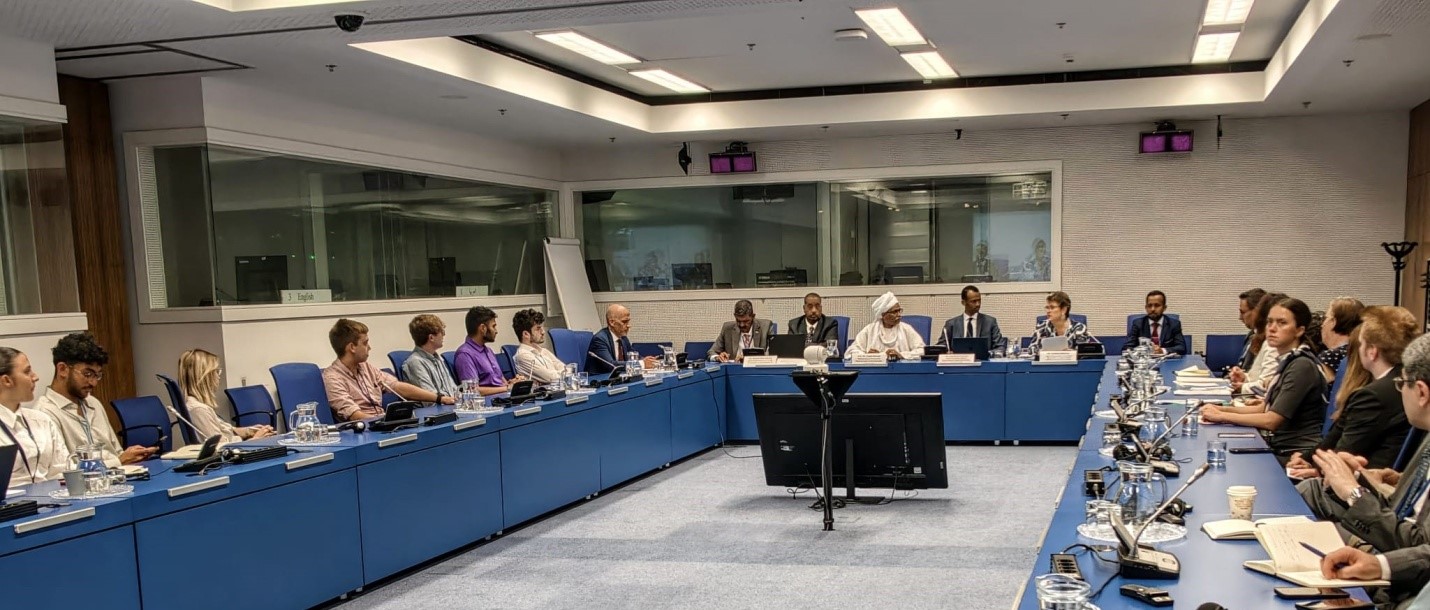
Sudan’s delegation participating in the 87th Ordinary Session of the African Commission on Human and Peoples' Rights currently being held in Gambia announced its rejection of the draft joint statement known as the “Banjul Joint Declaration,” adopted by the joint fact-finding mechanism of the African Commission on Human and Peoples’ Rights concerning the human rights situation in Sudan, as well as the report issued by the United Nations Independent International Fact-Finding Mission for the Sudan established by the Human Rights Council in Geneva on Sudan.
The Sudanese delegation justified its position by stating that the joint declaration lacks the legal basis required to grant legitimacy to such action, asserting that in the absence of such legal foundation, the joint undertaking falls outside the scope of legal legitimacy.
The delegation also criticized the submission of an incomplete report by the African investigative team, noting that the team had confined its work to visiting refugee camps abroad and conducting some interviews virtually. In its address delivered on Tuesday before the session in Banjul by Sudan’s Ambassador to the African Union Al-Zein Ibrahim Hussein, the delegation called on the African investigative team to engage directly with the national mechanisms responsible for investigating violations of international humanitarian law and national law inside Sudan, as well as with law enforcement authorities, and to hear testimony from victims within the country before entering into such commitments with international bodies that Sudan has refused to engage with, citing the presence of other international mechanisms operating inside the country under the United Nations.
Seite 11 von 48